
October is Wool Month, which makes it a good time to talk about one of nature’s most remarkable materials. Wool has been keeping people warm, dry and comfortable for thousands of years. And yet, when it comes to wool bedding, we still hear the same questions again and again.
- Isn’t wool itchy?
- Won’t I get too hot?
- Can I use wool in the summer?
- Is wool really suitable for sensitive sleepers?
- And what about washing it? Does wool require a lot of special care?
These are all fair questions. Especially when you are considering putting a natural material inside something you sleep on every night.
We have written about wool myths before, but there is an important distinction worth making. Wool is not always experienced in the same way. A thick wool sweater worn directly against your skin is one thing. Wool used as a filling inside a cotton-covered mattress, pillow or duvet is something quite different.
So, let’s take a closer look at some of the most common questions about literie en laine.
Is Wool Itchy?
This is probably the first thing that comes to mind when someone hears the words “wool bedding.”
And we understand why. Most of us have owned that one wool sweater that looked lovely but made us want to scratch our arms five minutes after putting it on. But wool bedding is not necessarily a wool sweater.
The itchiness associated with some wool clothing is usually caused by coarse fibers pressing against the skin. When those fibers bend or move against the skin, they can create that familiar prickly sensation.
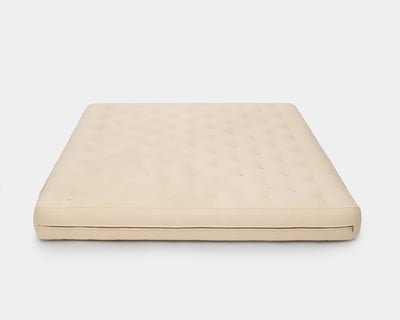
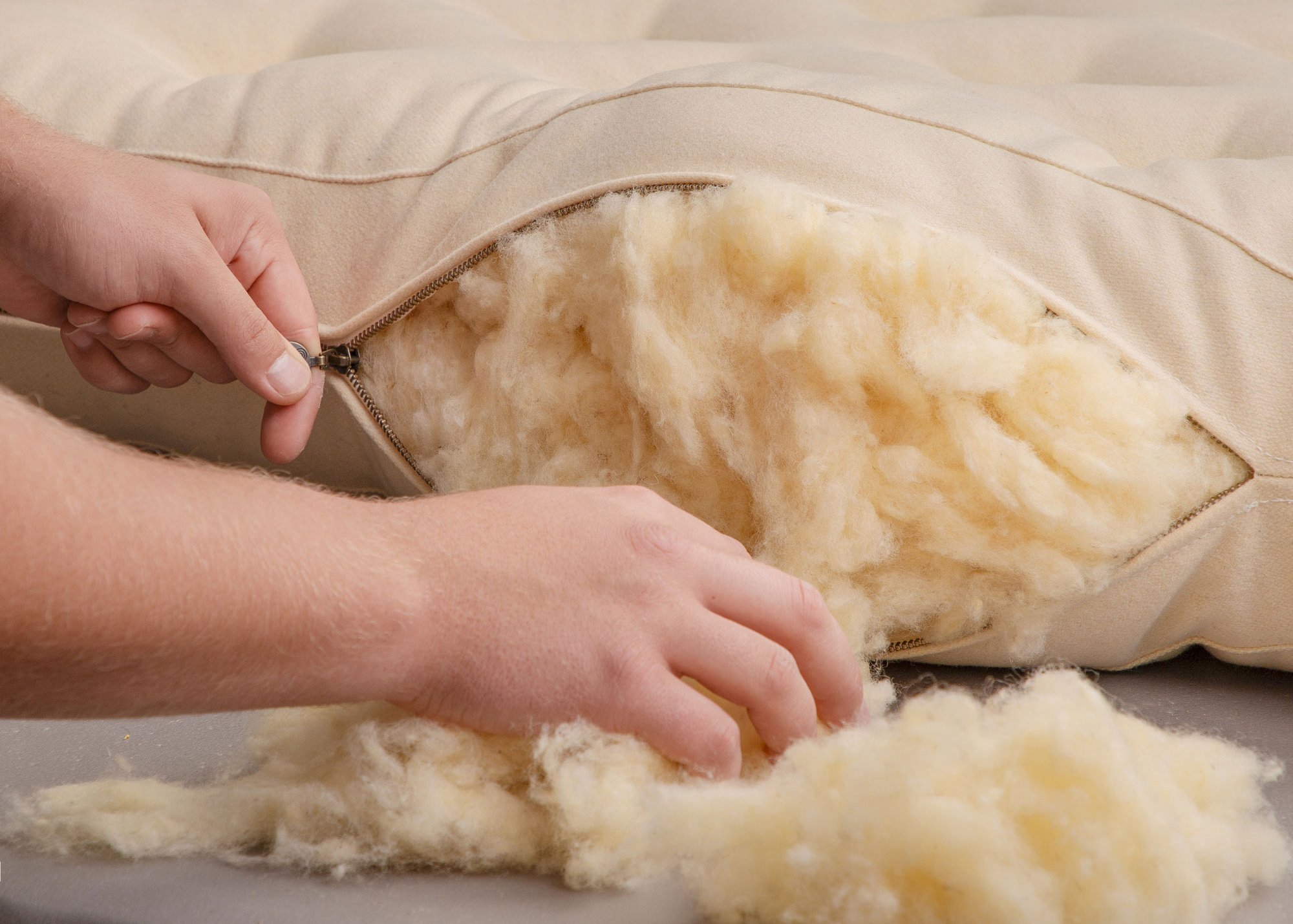
With wool bedding, the situation is different. The wool used as filling in a mattress, topper, pillow or duvet is enclosed inside a fabric cover. In our products, the wool filling is surrounded by all-natural fabrics, so the wool itself is not sitting directly against your skin.
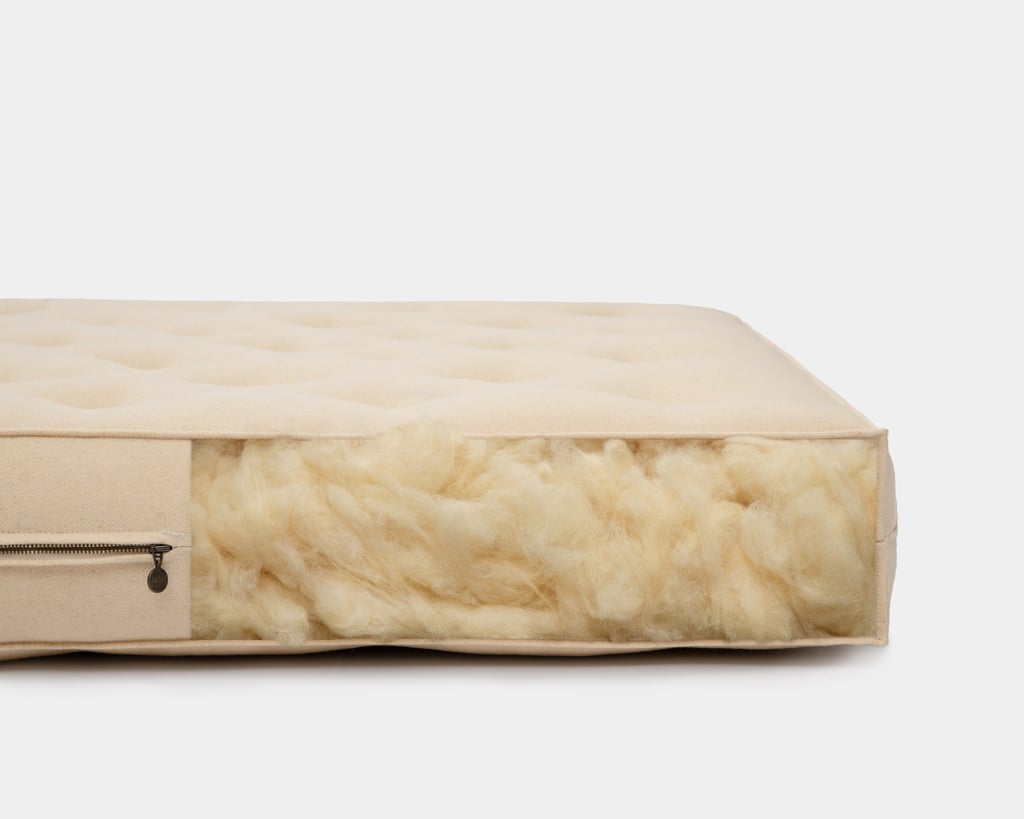
Then there is usually another layer between you and the bedding, such as a mattress protector and your sheets.
So if you don’t enjoy the feeling of a coarse wool sweater, that doesn’t automatically mean that you won’t enjoy sleeping on wool.
Of course, everyone’s skin is different. Some people are more sensitive to certain fibers and materials than others. But it is important to distinguish between wearing wool directly against your skin and sleeping on wool-filled bedding enclosed in fabric. They are simply not the same experience.
Is Wool Bedding Too Hot?
This one seems logical at first. Wool is associated with winter sweaters, thick socks and cozy blankets. So wouldn’t sleeping on a wool mattress or under a wool duvet make you overheat? Not necessarily.
One of the interesting things about wool is that it doesn’t simply trap heat. It helps regulate the microclimate around your body.
Wool fibers can absorb moisture vapor and release it into the surrounding air. They are also naturally breathable, allowing air and moisture to move through the material. This matters because overheating during sleep is not only about the temperature of the room. It is also about what happens between your body and your bedding.
When you get warm, you perspire. If that moisture stays trapped close to your body, you can end up feeling hot, damp and uncomfortable. Wool helps manage that moisture rather than simply holding it next to you. This is one of the reasons wool can be useful in both colder and warmer weather.
Warm does not have to mean hot.
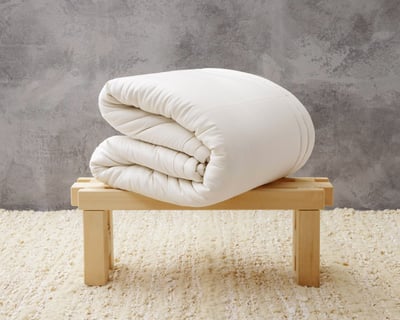
A cozy wool duvet in winter and a breathable wool layer in summer can serve very different purposes.
And, of course, the weight of the product matters. A lightweight wool duvet is not the same thing as a heavy winter duvet. When choosing wool bedding, it is worth considering the season, your sleeping environment and how warm you naturally sleep.
Is Wool Good for Summer?
Yes. And this is one of those things that can feel counterintuitive until you actually experience it.
We tend to divide bedding into “winter” and “summer” materials. Wool, however, doesn’t work quite that way.
Its ability to manage moisture and allow air to circulate can make it particularly useful when the weather is warm.
Think about a summer night when the room isn’t necessarily unbearably hot, but you still wake up feeling sweaty and uncomfortable.
Sometimes the problem isn’t simply the temperature. It is humidity and moisture trapped between your body and your bedding.
Wool can absorb moisture vapor and help move it away from the body, creating a drier sleeping environment.
This is also why wool can work well in warm and humid climates.
Of course, this doesn’t mean that every wool product is suitable for every summer night. A thick winter duvet is still a thick winter duvet.
The construction, weight and layers all matter. But the idea that wool is exclusively a winter material is one worth leaving behind.
Is Wool Suitable for Sensitive Sleepers?
This question is a little more complicated because “sensitive” can mean many different things. Some people have sensitive skin. Others are sensitive to certain textures or materials. Some simply know that they cannot tolerate wool clothing.
And then there are people who worry that wool itself is an allergen. These things should not all be treated as the same issue.
As we mentioned above, the physical sensation of itchiness from a coarse wool fiber is not necessarily the same thing as an allergy. The sensation can simply come from the fiber irritating the skin.
And when wool is used as a filling inside bedding, the fibers are not directly touching your body.
This is one reason that someone who cannot wear a wool sweater may still be perfectly comfortable sleeping on a wool mattress or under a wool duvet.
There is another thing worth considering when choosing bedding for a sensitive sleeper: what else is in the product?
The wool is only one part of the equation. The fabric, finishes, dyes and other materials used in a product can also affect how it feels and performs.
For people who are trying to keep their sleeping environment as simple and natural as possible, it makes sense to look at the entire construction rather than just the word “wool” on the label.
For a closer look at the standards behind the materials we use, explore our material certifications. You’ll find explanations of GOTS, OEKO-TEX® STANDARD 100 and Woolmark®, alongside the relevant certificates.
Is Wool Difficult to Maintain?
Wool has a reputation for being fussy. Hand wash only. Cold water. Special detergent. Don’t wring it. Don’t tumble dry it. Don’t look at it the wrong way…
Well, perhaps we are exaggerating a little. But the reputation doesn’t come from nowhere.
Wool fibers can felt or shrink when exposed to the wrong combination of heat, moisture and agitation. So wool products do need to be treated according to their construction and care instructions.
That does not, however, mean that wool bedding needs constant cleaning.
Quite the opposite. Wool naturally manages moisture and is resistant to many odors, which means that bedding does not necessarily need to be washed as frequently as you might think. Regular airing can go a long way.
A removable washable cover or mattress protector can also help keep the main wool-filled product fresh while protecting it from everyday dirt and moisture.
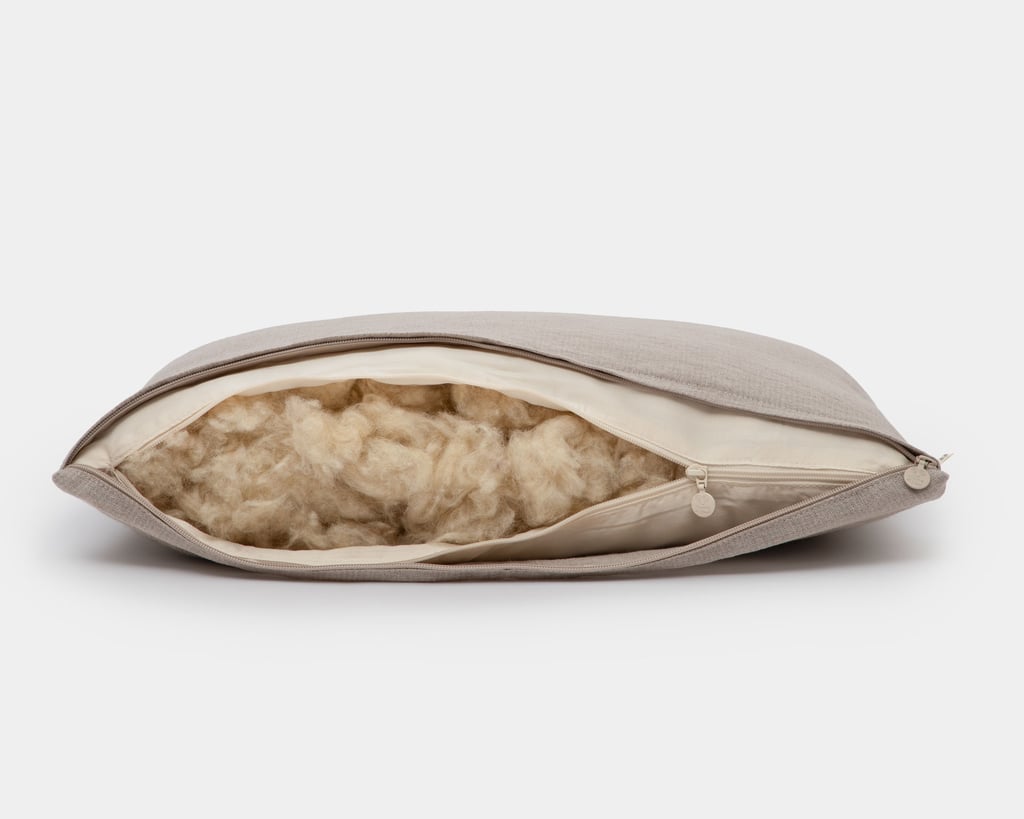
And when something does need cleaning, the most important rule is simple: Check the care instructions for that particular product. There is no single washing rule that applies to every wool item.
What Actually Matters When Choosing Wool Bedding?
Once you get past the myths, choosing wool bedding becomes much less complicated. There are a few things that are worth looking at.
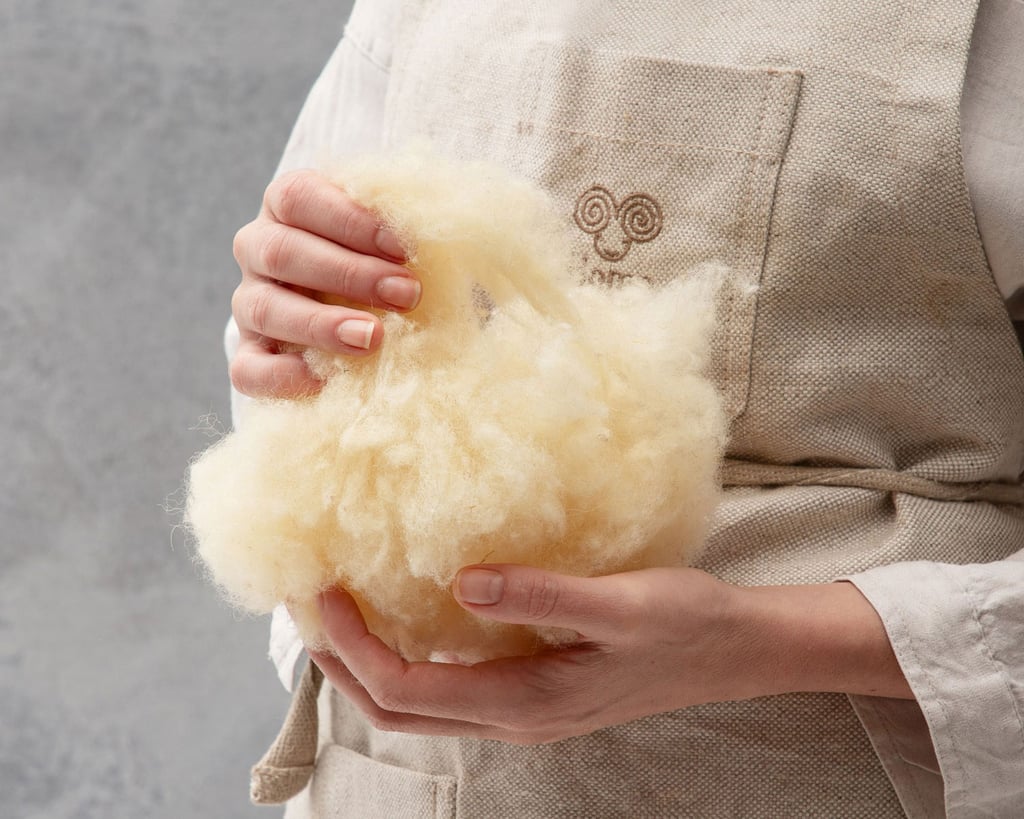
The wool itself
- Where does it come from?
- How has it been processed?
- Has it been treated with unnecessary chemicals or finishes?
Wool is a natural material, but not every wool product is made in exactly the same way.
Curious about what goes into our bedding? Discover how our wool is sourced and processed.
The fabric around it
This is especially important if you are concerned about itchiness. There is a big difference between a wool blanket made from wool fabric and a wool-filled mattress enclosed in cotton fabric.
Always look at the complete construction of the product, not just the filling.
The weight
More wool does not automatically mean better. A thick wool duvet designed for cold winter nights will feel very different from a lightweight wool layer intended for warmer weather. The right amount depends on the product, your sleeping environment and your personal comfort.
The care instructions
This is perhaps the least glamorous part of choosing bedding, but it matters. Find out how the product should be cleaned before you buy it. A good natural product should come with clear care instructions. And if you are unsure, ask.
The reason you are choosing wool in the first place
Are you looking for better temperature regulation? A more breathable sleeping environment? A natural alternative to synthetic filling? A mattress that feels more resilient and supportive? Or simply a way to bring more natural materials into your bedroom? Knowing what you want from the material makes it much easier to choose the right wool product.
So, Is Wool Really as Complicated as It Sounds?
Probably not. Wool has been used for generations because it does a lot of things remarkably well without needing to be engineered into something complicated.
It can help regulate temperature.
It can manage moisture.
It is naturally resilient.
And when used as a filling inside properly constructed bedding, it doesn’t have to feel itchy or scratchy against your skin.
It also doesn’t need to be washed every few days to stay fresh.
The important thing is to understand that not all wool products are the same, and not all wool is used in the same way.
A wool sweater, a wool carpet, a wool blanket and a wool-filled mattress can have completely different characteristics and care requirements.
So the next time someone tells you that wool is too hot, too itchy or impossible to maintain, you can tell them: It depends on the wool. And it depends on how it is used… That is where the real story begins.
ACHETER MAINTENANT
-
Prix à partir de Le prix initial était : $1,198.00.$958.00Le prix actuel est : $958.00. USD Sélectionner les options
-

Journée de la femme, Oreillers en laine et taies d'oreiller biologiques
Prix à partir de $184.00 USD Sélectionner les options -