GRATUIT
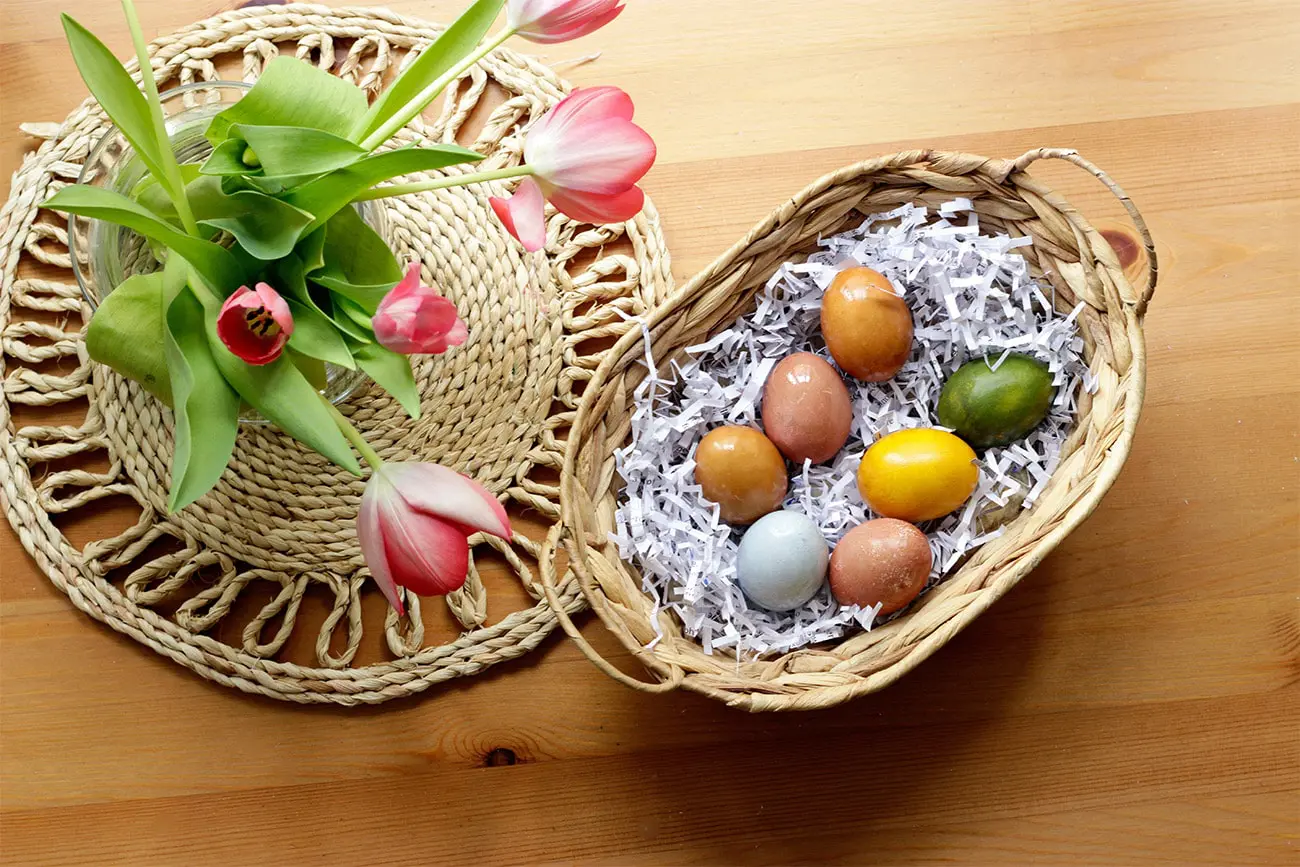
There’s truly nothing better than spending time with family. While gatherings may be loud or even awkward at times, these moments around the table are a core part of our upbringing. Easter is a time to celebrate with loved ones, make memories, and have fun. But it’s also a perfect opportunity to show kindness to the environment.
As the excitement for this vibrant holiday builds, we at Home of Wool are thrilled to share three sustainable Easter tips that will help you celebrate joyfully while being mindful of the planet. Ready to make your Easter greener? Let’s get started!
It’s Egg Time – Naturally!
Easter without Eggs is like a Home of Wool mattress without the wool. Easter eggs are undoubtedly the highlight of the holiday. From their vibrant colors to the joy of decorating them with loved ones. However, many store-bought egg dyes contain synthetic chemicals that may raise concerns for both our health and the environment. Fortunately, there’s a more sustainable and safer alternative: dyeing eggs with natural ingredients. It’s an easy way to reduce waste and use up leftovers from your fridge.
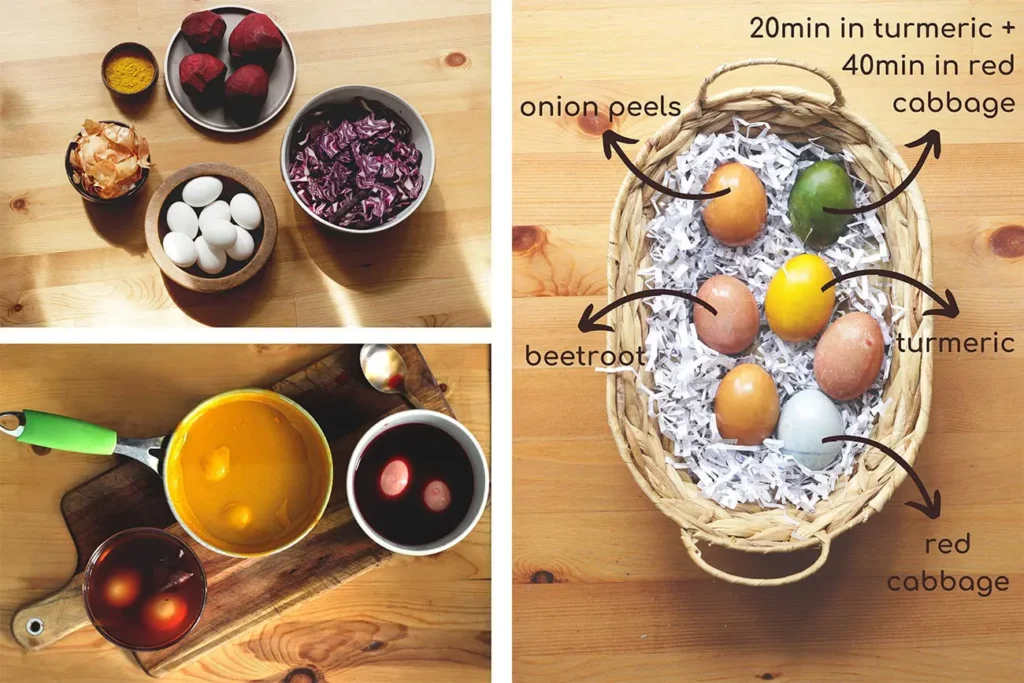
Here’s how to make your own natural dyes for Easter eggs:
What You’ll Need:
- Water: around 3 cups per color
- White vinegar: 2 tbsp per color
Natural Dyes: Ingredients You Can Use
- Red: Beets (4 cups, chopped)
- Orange: Yellow onion peels (4 cups)
- Yellow: Turmeric (3 tbsp)
- Blue: Purple cabbage (½ head, chopped)
- Green: Combine yellow and blue dyes (Dip in yellow for 30 minutes, then dip in blue for 20 minutes)
Preparation:
- In separate pans, bring each natural ingredient to a boil with 3 cups of water and 2 tablespoons of vinegar.
- Simmer for at least 30 minutes (longer for deeper colors), and once the color is strong enough, pour the dye into bowls.
- Immerse your eggs into the dye while they’re still hot and let them soak for at least 30 minutes. The longer the soak, the richer the color.
Natural dyes are wonderful because they don’t just add beautiful hues to your eggs, but they’re also completely non-toxic, making them a great choice for families. Get creative and experiment with different techniques for a fun and sustainable Easter.
Download the recipe ici.
Getting Into the Easter Mood – Sustainably
Home decorations are always a good idea if you want to set the right mood for a celebration. Unfortunately, these days most decorations consist of items that are meant to be used only once, and the majority gets thrown away pretty quickly. In order to avoid unnecessary waste, we have prepared a few ideas for some easy sustainable Easter decorations that you can make on your own or together with your young ones.
DIY Clay Easter Ornaments
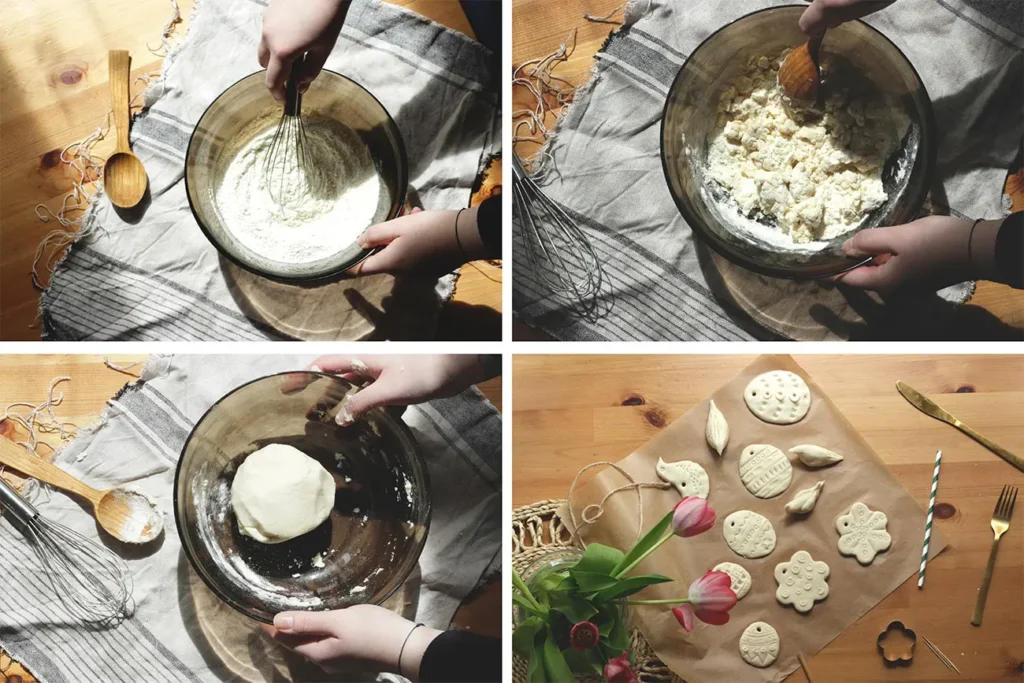
What You’ll Need:
- 1 cup of flour
- ½ cup of salt
- ½ cup of water
- Thick string or thread
Preparation:
- Mix the dry ingredients in a bowl, then gradually add water until the mixture forms a dough.
- Knead until smooth, then shape it into eggs or other Easter symbols.
- Let them dry for 48 hours. No baking required!
- Once dry, decorate with natural egg dye or eco-friendly paint for a sustainable touch.
Get the recipe ici.
Sustainable “Grass” for Easter Baskets:
Searching for fake grass to fill your egg baskets? Look no further! If you have a couple of old magazines or newspapers laying around, you can easily create a DIY “grass” filling which can add a bit of an urban vibe to your table. This sustainable Easter trick can put some ease to your mind because you can reuse the filling as much as you want or if not – you can recycle it with other paper.
Simply fold a piece in a narrow zig-zag pattern and cut it on thin slices either with a pair of scissors or a Stanley knife (*if you are using the knife, don’t forget to place a cutting board underneath). Spread the cutouts with your hands so they can get some more volume and put the needed amount in a basket or a plate where your beautifully dyed eggs would go.


Fear No Leftovers – Reduce Waste This Easter
A great celebration always comes with a great amount of food, especially when you’re hosting a gathering for family or friends. Unfortunately, food leftovers are almost inevitable after these kinds of events. In the U.S., a staggering 80 billion pounds of food are wasted every year, accounting for 30% to 40% of the country’s annual food supply. If this isn’t enough of a reason to minimize food waste, what is? Let’s explore how we can make this Easter truly sustainable.
Food Boxes are a Lifesaver
If you feel like you went a bit too far and you prepared much more food than what could be eaten, get some recyclable paper containers and make personalized meal boxes for when the guests are leaving. Another option is to ask your guests to bring a lunch box themselves which can be filled with food after the meal.
Smart Ways to Store Leftovers
Storing leftovers in an overly filled fridge brings the risk of forgetting about it – “out of sight, out of mind”, they say. Choose a clear glass container, rather than an opaque one, to ensure you eat it soon enough. Freezing meals or alternating them a bit afterwards can also be a way of figuring out the leftovers’ situation. Try mixing things up and you may end up with an even better idea for your next gathering.
Host an Easter Potluck
If you don’t have the time to cook everything on your own, sharing the responsibility is a great way to reduce food waste. You can ask your guests to bring a dish they’ve prepared at home, turning the Easter meal into a potluck. This way, everyone can enjoy a variety of dishes and perhaps exchange skills or recipes. If there’s still too much food leftover, simply ask everyone to take some home and handle it responsibly.
Easter Trends for 2025: What’s New?
As we move further into 2025, Easter celebrations continue to evolve with sustainability at the forefront. Here are a few trends to consider for your family and friends’ Easter event:
Plant-Based Easter Dinners: With the growing trend toward plant-based diets, more families are choosing to have a vegetarian or vegan Easter feast. Not only does this reduce your carbon footprint, but plant-based meals can also be just as festive and delicious.
Zero-Waste Easter Baskets: Instead of using plastic or one-time-use items for Easter baskets, consider reusing materials you already have or opting for sustainable items like wooden toys, cloth bags, and eco-friendly candies.
Home-Grown Microgreens on the Menu: Adding home-grown microgreens to your Easter menu is a great way to incorporate fresh, sustainable ingredients. They are easy to grow, nutritious, and can enhance the flavor of your dishes while reducing the environmental impact of store-bought greens. If you want them ready by Easter, now’s the time to plant them. They need about 10 days to be ready for your plate.
A More Sustainable Easter
Easter is about celebrating life, family, and the renewal of the season. But it’s also a wonderful opportunity to be more mindful of our impact on the planet. From natural dyeing techniques to reducing waste with DIY decorations and food boxes, these small changes can make a big difference.
At Home of Wool, we’re committed to offering products that are kind to the environment, so you can celebrate with a clear conscience. We hope these tips inspire you to enjoy a beautiful, sustainable Easter holiday filled with love, joy, and mindful choices.
Happy Easter from all of us at Home of Wool!