 KOSTENLOS
A home filled with healthy furniture is just as important as healthy food. More and more research points to the dangers of some toxic chemicals and synthetic materials used to manufacture home furnishings like mattresses and bedding.
There are thousands of potentially harmful chemicals used across the board when making up these items. And there are just as many marketing terms that are used to convince us we are making healthy and environmentally conscious choices. Many of these terms are quite ambiguous so we decided to compile a list of the most frequently used words on labels and ads, so we can help you to become an empowered savvy home furnishings shopper.
We see these so often but do you actually know what is the difference between Natural, All Natural, Organic, and Certified Organic? We’ve got you covered on this.
Healthy Home Textiles Glossary of Terms
‘Natural’
You can often see this word on food and home products labels. We associate it with materials found or grown in nature. But in fact, there are no specific requirements for using this word on a label. It doesn’t specifically point out what materials there could or could not be inside the package or how were these ‘natural’ materials treated while creating the final product.
No synthetic man-made fabrics and materials can ever be called ‘natural’ but the final product can actually be labeled as such even if it contains chemicals and synthetics alongside the natural materials.
Examples of man-made fabrics and textiles include foam, nylon, polyester, polyvinyl chloride (PVC), spandex, rayon, acetate and acrylic.
‘All-natural’
All-natural’ items are those in which every ingredient and component is made of natural materials and there are no synthetics in the composition. Getting an ‘all-natural’ product should give you a better piece of mind that you are making a safe choice, compared to those with a just ‘natural’ label.
‘Eco’
Also known as ‘environmentally-friendly’ oder ‘green’. This term refers to the impact that the products or materials and their manufacturing process have on the environment.
To be considered environmentally friendly they should have minimal or no impact on the environment. Be it during their extraction, sourcing, growing, or production. And this is where it gets a bit fuzzy because, again, there is no clear definition on what is acceptable in terms of impact and what is not.
‘Non-toxic’
This term is also not regulated. It is mostly used to signify the lack of synthetics or chemicals inside the finished product (or material) that have toxic effects on your health or the environment. Unfortunately, according to guidelines by the Consumer Product Safety Commission, as long as the product kills less than half the lab rats during testing, it can be labelled as “non-toxic”.
‘Toxin free’
Products created without the use of potentially toxic, carcinogenic, or poisonous ingredients that could be questionable in safety. This means there still could be chemicals inside, just not the ones that are proven to be toxic.
‘Chemical Free’
This term is similar to non-toxic but implies no chemicals were used whatsoever. These can be all sorts of finishes, dyes, stabilizers, anti-wrinkle chemicals, fire and flame retardants, and so on.
‘Organic’ and ‘Certified organic’
In order to be organic, materials should be grown in an environment that was not treated with chemical pesticides, herbicides, fungicides, and artificial fertilizers. Also organic items cannot be genetically modified.
If something is labeled as organic without being certified as organic it doesn’t mean that it is not organic per se.
If the label states ‘organic’ and not ‘certified organic’ that means that the item has not been independently tested to verify that it complies to a set of standardized requirements of the organic certificate.
Oftentimes companies simply overgo certification due to the high costs involved, even though their products are pure and comply to the requirements to get certified. This is especially difficult for small companies with limited budgets.
So don’t hesitate to contact the companies directly and ask them your questions to be sure you are getting a product as pure as possible, even though they lack formal certification.
Popular certificates for textiles and home furnishings
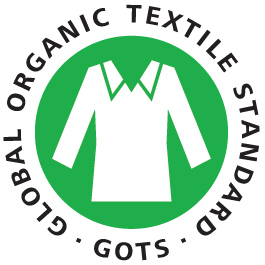
GOTS (Globaler Standard für ökologische Textilien)
GOTS is one of the most recognizable organic certificates, and specifically in North America. The standard covers the processing, manufacturing, packaging, labeling, trading, and distribution of all textiles. It evaluates all chemicals used in the processes, to meet basic requirements on toxicity and biodegradability/eliminability and does not allow the use of toxic heavy metals, formaldehyde, aromatic solvents, functional nano particles, genetically modified organisms (GMO) and their enzymes, no chlorine bleaching, no azo dyes, phthalates, and PVC.
A textile product carrying the GOTS label grade ‘organic’ must contain a minimum of 95% certified organic fibers whereas a product labeled with ‘made with organic’ must contain a minimum of 70% certified organic fibers.

USDA Organic
This certificate is issued by the US government. It only covers that raw natural fibers used to make the textiles and home products, such as cotton, wool, and flax. These must be organic, that is they meet the National Organic Program standards. However, there is no regulation for what other ingredients are used in the making of the final products. So toxic dyes and finishes can still be present. Be sure to read the fine print and ask companies your questions to clarify anything you need to know before purchasing.
Öko-Tex Standard 100
Öko-Tex ist einer der ältesten und zuverlässigsten Standards auf dem Markt. Auch wenn er außerhalb Europas bei Kunden weniger bekannt ist, können Sie sicher sein, dass ein Produkt, das dieses Label trägt, auf Hunderte von Chemikalien und Schadstoffen geprüft wurde. Dazu gehören sowohl Stoffe, die im fertigen Produkt enthalten sind, als auch Stoffe, die bei normaler Verwendung des Produkts freigesetzt werden und schädlich sind.
Es verlangt eine geringe Emission von flüchtigen organischen Verbindungen (VOC) und Formaldehyd aus Schaumstoffen und verbietet gleichzeitig die Verwendung bestimmter chemischer Flammschutzmittel, Farbstoffe und allergieauslösender Farbstoffe.
Der Öko-Tex Standard 100 umfasst Vorschriften zu verbotenen Azofarbstoffen, Formaldehyd, Nickel usw. Auch gesundheitsschädliche Chemikalien werden geprüft, wenn sie noch nicht gesetzlich geregelt sind. Die Anforderungen berücksichtigen auch den Verwendungszweck der Textilien. Je intensiver der Hautkontakt eines Textilprodukts ist, desto strenger sind die Grenzwerte für die jeweilige Produktklasse.
Product class I: Articles for babies and toddlers
Product class II: Articles used close to the skin
Product class III: Articles used away from the skin
Product class IV: Materials
Dieses Zertifikat wird ausschließlich von Oeko-Tex selbst ausgestellt, wodurch sichergestellt wird, dass die oben genannten strengen Kriterien erfüllt sind, was den Kunden Vertrauen vermittelt.
***
At Home of Wool, we focus on making healthy wool mattresses, bedding, and home décor items for you and your loved ones, out of the most natural and pure materials available, using only wool, linen, cotton, and silk. We never use finishes, flame retardants, synthetics, and chemicals of any sort.
No matter where you are looking to shop for your next home furnishings purchase, we always advise to first find out what materials the product is made of throughout its production process. This small but often overlooked step will help you find out if the item is a healthy choice for your home and for the planet.